
Your digestive system plays a vital role in keeping your body healthy. It breaks down food, absorbs nutrients, and removes waste. When any part of this system is affected, it can lead to discomfort, pain, and other health problems that interfere with your daily life.
Many people experience digestive issues such as acidity, bloating, constipation, or stomach pain from time to time. While some problems are temporary and improve with simple lifestyle changes, others may indicate an underlying digestive disorder that requires medical attention. Ignoring persistent symptoms can delay diagnosis and make treatment more difficult.
Understanding the common digestive disorders can help you recognize warning signs early and seek appropriate care before complications develop. This article explains the most common digestive conditions, their symptoms, causes, treatment options, and practical tips to maintain a healthy digestive system.
Table of Contents
- What Are Digestive Disorders?
- Common Digestive Disorders Everyone Should Know
- When Should You See a Gastroenterologist?
- Tips for Maintaining Good Digestive Health
- Frequently Asked Questions
- Key Takeaways
- Conclusion
What Are Digestive Disorders?
Digestive disorders are conditions that affect the organs responsible for digestion, including the esophagus, stomach, intestines, liver, gallbladder, pancreas, and bile ducts. Some disorders are temporary, while others are chronic and require ongoing management.
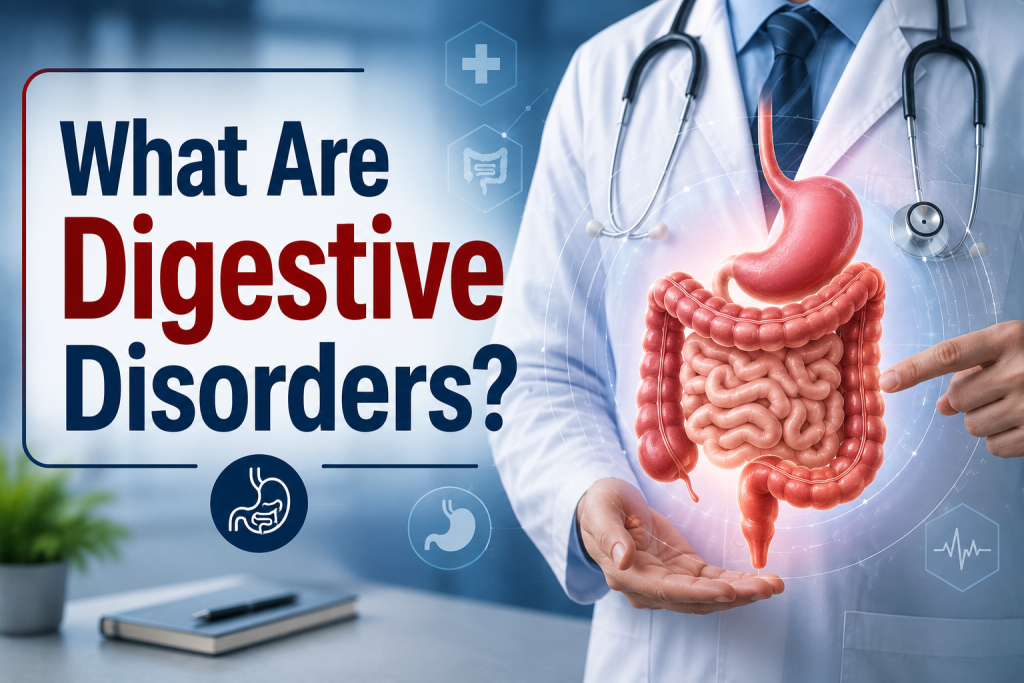
These conditions can affect people of all ages and vary in severity from mild discomfort to serious illnesses.
Common Digestive Disorders Everyone Should Know
1. Gastroesophageal Reflux Disease (GERD)
GERD occurs when stomach acid repeatedly flows back into the esophagus, irritating its lining.
Common Symptoms
- Frequent heartburn
- Sour taste in the mouth
- Chest discomfort
- Difficulty swallowing
- Chronic cough
- Hoarseness
Risk Factors
- Obesity
- Smoking
- Pregnancy
- Eating large meals
- Spicy or fatty foods
Treatment
- Lifestyle modifications
- Weight management
- Acid-reducing medications
- Endoscopy in persistent cases
2. Gastritis
Gastritis refers to inflammation of the stomach lining.
Symptoms
- Burning stomach pain
- Nausea
- Vomiting
- Feeling full quickly
- Indigestion
Causes
- Helicobacter pylori infection
- Excessive painkiller use
- Alcohol consumption
- Stress
- Autoimmune disorders
Management
Treatment depends on the cause and may include medications to reduce stomach acid, antibiotics for bacterial infection, and avoiding irritating foods.
3. Peptic Ulcers
Peptic ulcers are open sores that develop in the stomach or upper part of the small intestine.
Symptoms
- Burning abdominal pain
- Bloating
- Nausea
- Dark stools
- Vomiting blood (medical emergency)
Causes
- H. pylori infection
- Long-term NSAID use
- Smoking
Prompt diagnosis helps prevent complications such as bleeding or perforation.
4. Irritable Bowel Syndrome (IBS)
IBS is a common condition affecting the large intestine.
Symptoms
- Abdominal pain
- Bloating
- Constipation
- Diarrhea
- Excess gas
Symptoms often worsen during stress or after certain foods.
Treatment
- High-fiber diet
- Stress management
- Adequate hydration
- Regular exercise
- Medications when required
5. Inflammatory Bowel Disease (IBD)
Unlike IBS, IBD involves chronic inflammation of the digestive tract. It includes Crohn’s disease and ulcerative colitis.
Symptoms
- Persistent diarrhea
- Blood in stool
- Weight loss
- Fatigue
- Severe abdominal pain
Early diagnosis is important to reduce complications and improve quality of life.
6. Constipation
Constipation is one of the most common digestive complaints.
Symptoms
- Hard stools
- Fewer than three bowel movements weekly
- Difficulty passing stool
- Feeling of incomplete evacuation
Common Causes
- Low-fiber diet
- Dehydration
- Physical inactivity
- Certain medications
Prevention
Increase fiber intake, drink enough water, and stay physically active.
7. Chronic Diarrhea
Diarrhea lasting more than four weeks should never be ignored.
Possible causes include:
- IBS
- IBD
- Food intolerance
- Infections
- Malabsorption disorders
Medical evaluation helps identify the underlying cause.
8. Gallstones
Gallstones are hardened deposits that form inside the gallbladder.
Symptoms
- Severe pain in the upper right abdomen
- Pain after fatty meals
- Nausea
- Vomiting
Some patients develop bile duct blockage requiring advanced procedures such as ERCP.
9. Fatty Liver Disease
Fatty liver disease occurs when excess fat accumulates in the liver.
Risk Factors
- Obesity
- Diabetes
- High cholesterol
- Sedentary lifestyle
Symptoms
Many people have no symptoms initially, while others may experience:
- Fatigue
- Mild abdominal discomfort
- Unexplained weakness
Lifestyle changes remain the cornerstone of treatment.
10. Hemorrhoids (Piles)
Hemorrhoids are swollen veins in the rectum or anus.
Symptoms
- Rectal bleeding
- Pain during bowel movements
- Itching
- Swelling
Most mild cases improve with dietary changes and proper hydration.
Warning Signs You Should Never Ignore
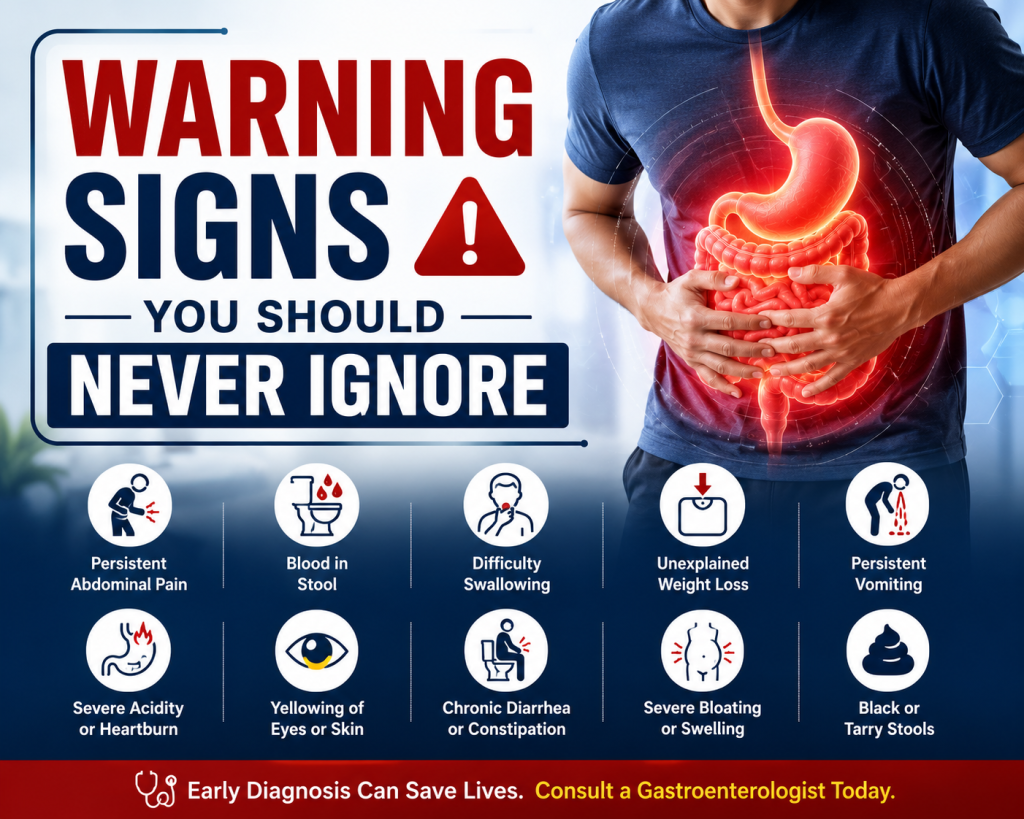
Consult a gastroenterologist if you experience:
- Persistent abdominal pain
- Blood in stool
- Difficulty swallowing
- Unexplained weight loss
- Continuous vomiting
- Yellowing of the eyes or skin
- Persistent acidity despite medication
- Chronic constipation or diarrhea
- Severe bloating lasting several weeks
- Black-colored stools
These symptoms may indicate a more serious digestive condition that requires timely evaluation.
How Are Digestive Disorders Diagnosed?
Depending on your symptoms, your doctor may recommend:
- Blood tests
- Stool examination
- Ultrasound
- CT scan
- Upper GI endoscopy
- Colonoscopy
- Liver function tests
- ERCP for bile duct and pancreatic disorders
Early diagnosis often leads to better treatment outcomes.
Tips to Keep Your Digestive System Healthy
Maintaining good digestive health doesn’t have to be complicated. Simple daily habits can make a significant difference.
- Eat a balanced diet rich in fruits, vegetables, and whole grains.
- Drink plenty of water throughout the day.
- Exercise regularly.
- Avoid smoking and excessive alcohol.
- Limit processed and high-fat foods.
- Eat meals at regular times.
- Manage stress through relaxation techniques.
- Sleep for 7–8 hours each night.
- Avoid unnecessary painkiller use.
- Schedule regular health check-ups if you have ongoing digestive symptoms.
When Should You Visit a Gastroenterologist?
Many digestive issues improve with dietary changes and proper care. However, if symptoms persist, recur frequently, or affect your daily activities, it is time to consult a specialist.
People with a family history of digestive diseases, chronic liver disease, inflammatory bowel disease, or gastrointestinal cancers should undergo regular medical evaluation.
If you are looking for the Best Gastroenterologist in Ranchi, an experienced Liver Specialist in Ranchi, ERCP Specialist in Ranchi, or a trusted Digestive Health Expert in Ranchi, seeking timely consultation can help ensure accurate diagnosis and effective treatment.
Frequently Asked Questions
1. What is the most common digestive disorder?
GERD, constipation, IBS, and gastritis are among the most common digestive disorders affecting adults.
2. Can stress cause digestive problems?
Yes. Stress can worsen conditions such as IBS, acidity, and indigestion by affecting the normal function of the digestive system.
3. When should I worry about stomach pain?
Persistent, severe, or recurring stomach pain—especially when accompanied by fever, vomiting, weight loss, or blood in the stool—should be evaluated by a doctor.
4. Is fatty liver disease reversible?
In many cases, early-stage fatty liver disease can improve with weight loss, a healthy diet, regular exercise, and proper medical management.
5. How can I improve my digestive health naturally?
Eat a fiber-rich diet, stay hydrated, exercise regularly, avoid smoking, limit alcohol, manage stress, and maintain a healthy weight.
6. What is ERCP used for?
ERCP is a specialized procedure used to diagnose and treat conditions affecting the bile ducts, gallbladder, and pancreas, including bile duct stones and strictures.
Key Takeaways
- Digestive disorders are common and can affect people of all ages.
- Persistent digestive symptoms should never be ignored.
- Early diagnosis helps prevent complications.
- A healthy lifestyle plays a major role in maintaining digestive health.
- Timely consultation with a gastroenterologist ensures accurate diagnosis and appropriate treatment.
About the Author
Dr. Chandan Kumar Yadav is a renowned Gastroenterologist, Hepatologist, and ERCP Specialist in Ranchi with expertise in diagnosing and treating digestive, liver, pancreas, and biliary disorders. He is committed to providing evidence-based, patient-centered care using advanced diagnostic and therapeutic techniques.
Conclusion
Digestive disorders can range from mild conditions like constipation and acidity to more serious diseases involving the stomach, intestines, liver, pancreas, or gallbladder. Paying attention to persistent symptoms and seeking medical advice early can prevent complications and improve long-term health.
Adopting healthy eating habits, staying physically active, managing stress, and attending regular health check-ups are simple yet effective ways to protect your digestive system. Remember, early diagnosis and timely treatment often lead to better outcomes and a better quality of life.
If you are experiencing digestive problems, liver disorders, abdominal pain, acidity, jaundice, gallbladder stones, or require ERCP consultation, schedule an appointment with Dr. Chandan Kumar Yadav, one of the leading Gastroenterologists and ERCP Specialists in Ranchi.
