
Signs of Stomach Ulcers are often easy to overlook because they can feel similar to common digestive problems such as acidity, indigestion, or gas. Many people ignore persistent stomach discomfort, assuming it will improve on its own. However, recurring symptoms may indicate an underlying stomach ulcer that requires medical attention.
A stomach ulcer, also called a gastric ulcer, is an open sore that develops in the lining of the stomach. When left untreated, it can lead to complications such as internal bleeding, severe pain, and damage to the stomach wall.
Recognizing the warning signs early can help you get the right treatment before the condition worsens. Symptoms such as burning abdominal pain, bloating, nausea, loss of appetite, and unexplained weight loss should not be ignored.
In this article, we will explain the signs of stomach ulcers, their causes, risk factors, diagnosis, treatment options, and when you should consult a specialist.
What Is a Stomach Ulcer?
A stomach ulcer is a type of peptic ulcer disease that occurs when the protective layer inside the stomach becomes damaged. This allows stomach acid to irritate and erode the tissue, creating an open sore.
Stomach ulcers differ from ordinary acidity because they involve actual damage to the stomach lining.
What Causes Stomach Ulcers?
Contrary to popular belief, spicy foods do not directly cause stomach ulcers.
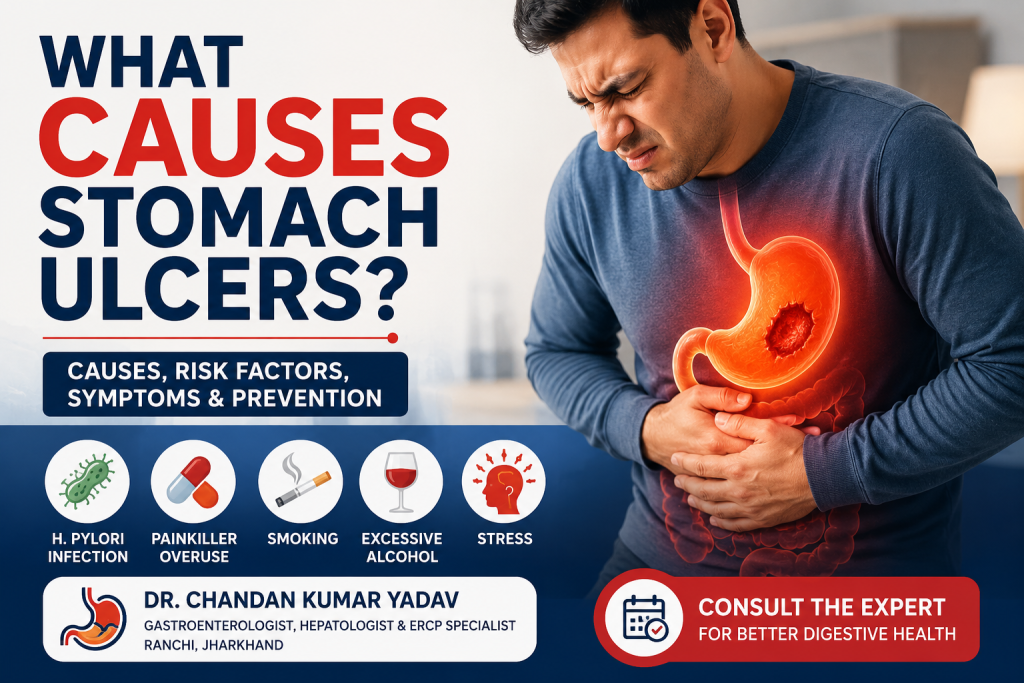
The most common causes include:
1. Helicobacter pylori (H. pylori) infection
This bacteria weakens the stomach’s protective lining, allowing acid to damage the tissue.
2. Frequent use of painkillers
Long-term use of medicines such as:
- Ibuprofen
- Aspirin
- Naproxen
can increase the risk of ulcers.
3. Smoking
Smoking interferes with the stomach’s natural protective mechanisms and slows healing.
4. Excessive alcohol consumption
Alcohol can irritate and inflame the stomach lining.
5. Excess stomach acid production
Certain medical conditions may increase acid production.
10 Signs of Stomach Ulcers You Should Never Ignore
1. Burning Pain in the Upper Abdomen
This is the most common symptom.
The pain may:
- Feel like burning, gnawing, or aching
- Occur between meals
- Become worse at night
- Improve temporarily after eating
Many patients describe it as a hunger-like pain.
2. Frequent Acidity and Heartburn
Recurring acidity that does not improve with simple remedies may indicate an underlying ulcer.
Symptoms include:
- Burning in the chest
- Sour taste in the mouth
- Acid reflux
3. Bloating
People with stomach ulcers often feel uncomfortably full.
You may notice:
- Excess gas
- Tightness in the abdomen
- Discomfort after eating
4. Nausea
Persistent nausea, especially in the morning, can occur due to irritation in the stomach lining.
Some people may also experience occasional vomiting.
5. Reduced Appetite
Eating may become uncomfortable because food can trigger pain.
As a result, many patients start skipping meals.
6. Unexplained Weight Loss
If you are losing weight without making dietary changes, it should be evaluated.
Weight loss can occur because:
- Eating becomes painful
- Appetite decreases
- Digestion is affected
7. Feeling Full Quickly
You may feel satisfied after eating only a small amount of food.
This symptom should not be ignored if it happens frequently.
8. Fatigue and Weakness
Internal bleeding from ulcers can lead to anemia.
Symptoms may include:
- Tiredness
- Dizziness
- Weakness
- Shortness of breath
9. Black or Tarry Stools
This is a warning sign of internal bleeding.
Black stools require immediate medical attention.
10. Vomiting Blood
Blood may appear bright red or resemble coffee grounds.
This is a medical emergency and requires urgent treatment.
Who Is More Likely to Develop Stomach Ulcers?
You may have a higher risk if you:
- Are over 50 years old
- Frequently take painkillers
- Smoke regularly
- Consume alcohol excessively
- Have an H. pylori infection
- Have a family history of ulcers
- Experience chronic digestive issues
How Are Stomach Ulcers Diagnosed?
A gastroenterologist may recommend several tests.
Medical History
Your doctor will ask about:
- Symptoms
- Medications
- Eating habits
- Family history
Endoscopy
A thin flexible tube with a camera is used to examine the stomach.
H. pylori Testing
Doctors may recommend:
- Breath tests
- Stool tests
- Blood tests
Blood Tests
These help detect anemia caused by internal bleeding.
How Are Stomach Ulcers Treated?
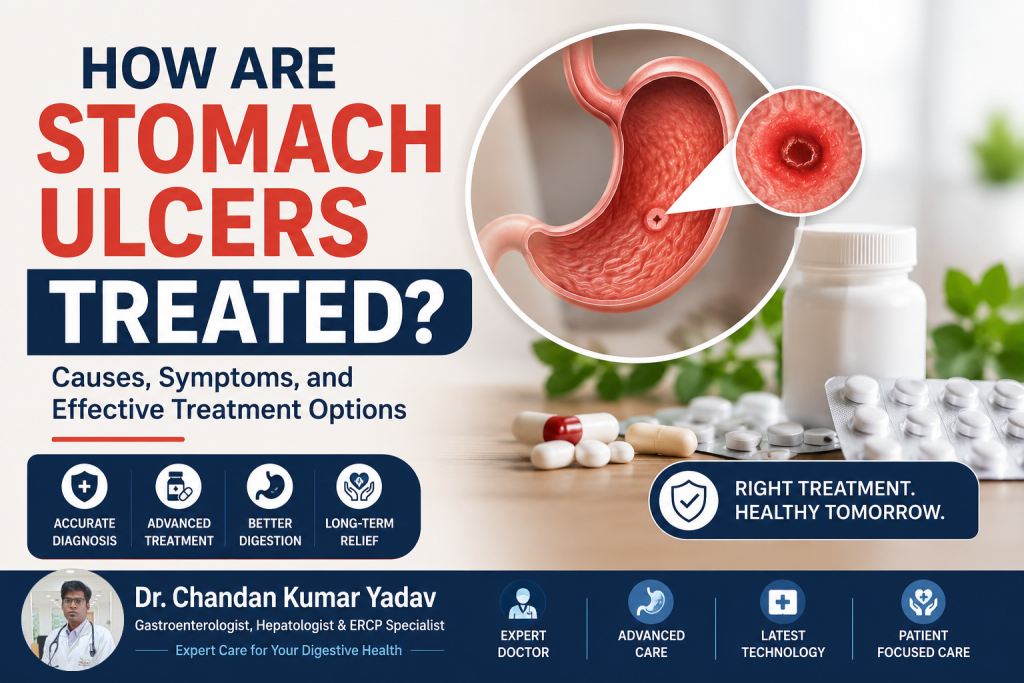
Treatment depends on the cause.
Antibiotics
Used to eliminate H. pylori infection.
Acid-Reducing Medications
These help decrease acid production and allow healing.
Protective Medicines
Some medicines coat and protect the stomach lining.
Lifestyle Changes
Doctors may recommend:
- Stopping smoking
- Reducing alcohol intake
- Avoiding unnecessary painkillers
- Eating balanced meals
Most ulcers heal within four to eight weeks with proper treatment.
Foods to Eat If You Have a Stomach Ulcer
Choose foods that are gentle on the stomach.
Recommended foods:
- Bananas
- Oatmeal
- Yogurt
- Apples
- Whole grains
- Green vegetables
- Lean protein
Foods to Avoid
Reduce or avoid:
- Spicy foods
- Deep-fried foods
- Excess coffee
- Carbonated drinks
- Processed foods
- Alcohol
Simple Tips to Prevent Stomach Ulcers
Follow these habits:
Eat meals on time
Avoid skipping meals.
Avoid smoking
Smoking slows healing and increases ulcer risk.
Limit alcohol consumption
Excessive alcohol can damage the stomach lining.
Avoid unnecessary painkillers
Always consult your doctor before prolonged use.
Practice good hygiene
Regular handwashing can reduce H. pylori transmission.
Manage stress
Although stress does not directly cause ulcers, it can worsen symptoms.
When Should You See a Doctor?
Seek medical attention if you experience:
- Persistent stomach pain
- Frequent acidity
- Unexplained weight loss
- Black stools
- Vomiting blood
- Ongoing bloating
- Difficulty eating
Early diagnosis can prevent serious complications.
If you are looking for the Best Gastroenterologist in Ranchi, timely consultation can help identify the root cause of your symptoms.
People searching for a Gastro Doctor in Ranchi or a Digestive Health Expert in Ranchi should avoid self-medicating for prolonged periods.
Comprehensive digestive evaluation is important because many digestive disorders share similar symptoms.
While an ERCP Specialist in Ranchi primarily treats pancreatic and bile duct conditions, expert gastroenterology care is essential for overall digestive health. Similarly, consulting a Liver Specialist in Ranchi can help identify associated digestive and liver conditions.
Frequently Asked Questions
Can a stomach ulcer heal naturally?
Some mild ulcers may improve, but medical treatment is often necessary to prevent complications.
What does stomach ulcer pain feel like?
It usually feels like a burning or gnawing pain in the upper abdomen.
Is stress responsible for stomach ulcers?
Stress alone is not the primary cause but can worsen symptoms.
How long does treatment take?
Most ulcers heal within four to eight weeks.
Are stomach ulcers dangerous?
Yes. Untreated ulcers can lead to bleeding and other serious complications.
Is endoscopy necessary?
Many patients benefit from endoscopy because it provides an accurate diagnosis.
About Dr. Chandan Kumar Yadav
Dr. Chandan Kumar Yadav is a renowned Gastroenterologist, Hepatologist, and ERCP Specialist in Ranchi with expertise in diagnosing and treating digestive, liver, pancreas, and biliary disorders.
He provides comprehensive care for digestive diseases, helping patients receive accurate diagnoses and personalized treatment plans.
Key Takeaways
- Burning upper abdominal pain is the most common sign of a stomach ulcer.
- H. pylori infection is a major cause.
- Frequent painkiller use can increase risk.
- Black stools and vomiting blood are emergency symptoms.
- Early diagnosis improves treatment outcomes.
- Healthy lifestyle habits can help prevent ulcers.
Conclusion
Stomach ulcers are common but should never be ignored. Persistent stomach pain, acidity, bloating, nausea, or unexplained weight loss may be warning signs that require medical attention.
Seeking expert care early can prevent complications and help you recover faster.
Book a Consultation
If you are experiencing digestive problems, liver disorders, abdominal pain, acidity, jaundice, gallbladder stones, or require ERCP consultation, schedule an appointment with Dr. Chandan Kumar Yadav, one of the leading Gastroenterologists and ERCP Specialists in Ranchi.
