
If your doctor has recommended an ERCP, it’s natural to have questions and even feel a little anxious. Many people are unfamiliar with this procedure until they or a loved one need it. Understanding what ERCP is, why it is performed, and what to expect can help you feel more confident about your treatment.
ERCP, or Endoscopic Retrograde Cholangiopancreatography, is a specialized procedure that helps diagnose and treat problems affecting the bile ducts, pancreas, gallbladder, and liver. Unlike many diagnostic tests that only identify a problem, ERCP can often treat the condition during the same procedure. For example, it can remove bile duct stones, relieve blockages, place stents, or treat narrowing of the bile ducts without the need for major surgery.
This guide explains everything you need to know about ERCP in simple, patient-friendly language. You’ll learn when ERCP is recommended, how it is performed, its benefits, possible risks, recovery process, and when you should consult a specialist. Whether you’re preparing for the procedure or simply looking for reliable information, this article will help you make informed decisions about your digestive health.
Table of Contents
- What Is ERCP?
- What Does ERCP Stand For?
- How Does ERCP Work?
- Why Is ERCP Needed?
- Conditions That May Require ERCP
- Symptoms That Should Not Be Ignored
- Who Is a Good Candidate for ERCP?
- How to Prepare for an ERCP Procedure
- What Happens During ERCP?
- How Long Does ERCP Take?
- Is ERCP Painful?
- What Happens After ERCP?
- Recovery After ERCP
- Benefits of ERCP
- Risks and Possible Complications
- ERCP vs MRCP: What’s the Difference?
- When Should You Consult an ERCP Specialist?
- Frequently Asked Questions
- Key Takeaways
- Conclusion
What Is ERCP?
ERCP stands for Endoscopic Retrograde Cholangiopancreatography, a specialized medical procedure used to diagnose and treat conditions affecting the bile ducts, pancreatic duct, gallbladder, and liver.
The procedure combines two advanced techniques:
- Endoscopy, which uses a thin, flexible tube with a camera to examine the digestive tract.
- Fluoroscopy (X-ray imaging), which allows the doctor to see the bile and pancreatic ducts after a special contrast dye is injected.
Unlike imaging tests such as ultrasound or CT scans, ERCP allows doctors to diagnose a problem and often treat it during the same session. This reduces the need for additional procedures and, in many cases, helps patients avoid surgery.
ERCP is commonly recommended for people with blocked bile ducts, bile duct stones, jaundice, pancreatitis, bile leaks, or narrowing of the ducts. It is considered one of the most effective procedures for managing disorders of the biliary and pancreatic systems.
What Does ERCP Stand For?
Although the full name sounds complex, each word has a simple meaning:
Endoscopic
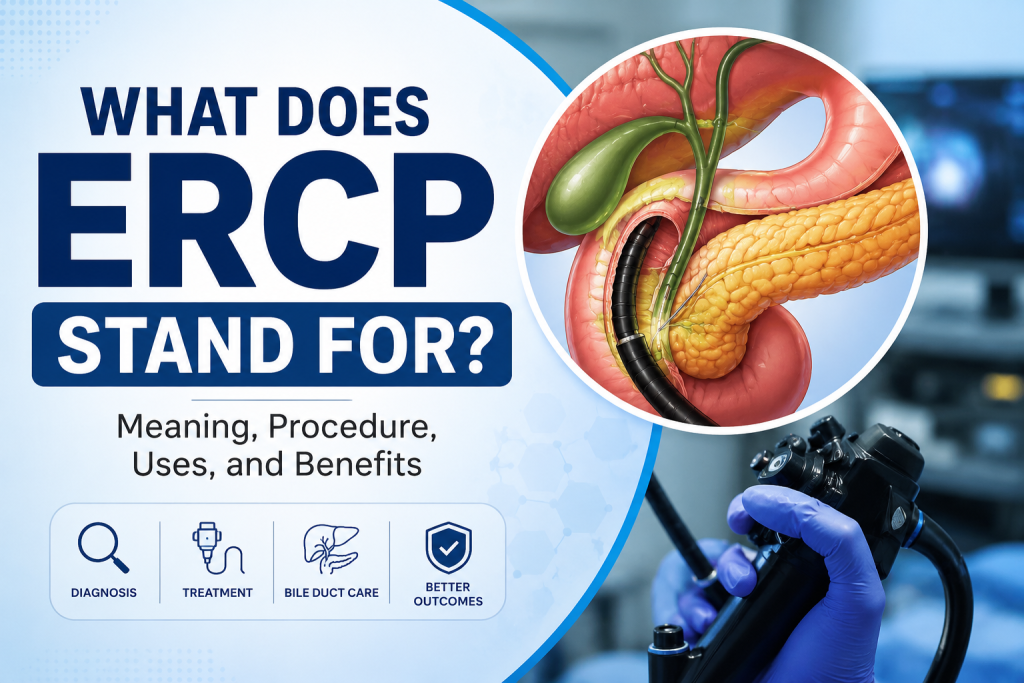
An endoscope is a long, flexible tube fitted with a tiny camera and light. It is gently passed through the mouth into the digestive tract, allowing the doctor to view internal structures without making any surgical cuts.
Retrograde
“Retrograde” means moving in the opposite direction of the normal flow. During ERCP, a contrast dye is injected backward into the bile and pancreatic ducts so they become visible on X-ray images.
Cholangio
This refers to the bile ducts, which carry bile from the liver and gallbladder to the small intestine. Bile helps digest fats and remove waste products from the body.
Pancreatography
This refers to imaging the pancreatic duct, which transports digestive enzymes from the pancreas to the small intestine.
Together, these steps allow the doctor to identify blockages, stones, narrowing, leaks, infections, or other abnormalities affecting these important digestive organs.
How Does ERCP Work?
ERCP combines advanced imaging with therapeutic treatment.
After you receive sedation, the doctor gently guides the endoscope through your mouth, esophagus, stomach, and into the first part of the small intestine (duodenum). At the opening where the bile duct and pancreatic duct drain into the intestine, a very small catheter is inserted.
A contrast dye is injected into the ducts, and real-time X-ray images are taken. These images help identify problems such as:
- Gallstones lodged in the bile duct
- Narrowed bile ducts (strictures)
- Bile leaks
- Pancreatic duct abnormalities
- Tumors causing obstruction
- Inflammation affecting the ducts
If a problem is found, treatment can often be performed immediately. Depending on the condition, the doctor may remove stones, widen narrowed ducts, place a stent to improve drainage, or take tissue samples for further examination.
This ability to both diagnose and treat makes ERCP one of the most valuable procedures in modern gastroenterology.
Why Is ERCP Needed?
Doctors recommend ERCP when they suspect a blockage or disease affecting the bile ducts or pancreatic ducts that requires treatment rather than imaging alone.
Common reasons include:
- Gallstones trapped in the bile duct
- Obstructive jaundice
- Bile duct strictures
- Chronic or recurrent pancreatitis
- Bile leaks after surgery
- Pancreatic duct disorders
- Unexplained blockage seen on ultrasound, CT scan, or MRI
- Placement or replacement of biliary stents
- Evaluation of certain pancreatic or bile duct tumors
Your doctor may first recommend tests such as blood investigations, abdominal ultrasound, MRCP, or CT scan. If these tests indicate a blockage or condition that requires intervention, ERCP may be the next step.
Conditions That May Require ERCP
Gallstones in the Bile Duct
Gallstones usually form inside the gallbladder. Sometimes they move into the common bile duct, where they block the normal flow of bile. This blockage can cause severe abdominal pain, jaundice, fever, and infection.
ERCP is one of the most effective ways to remove these stones without major surgery.
Obstructive Jaundice
Jaundice develops when bile cannot flow normally from the liver into the intestine. As bilirubin builds up in the blood, the skin and eyes become yellow.
Common causes include:
- Bile duct stones
- Tumors
- Scar tissue
- Narrowed ducts
ERCP helps identify the cause and restore normal bile flow by removing the blockage or placing a stent.
Bile Duct Strictures
A stricture is an abnormal narrowing of the bile duct. It may develop because of inflammation, previous surgery, chronic pancreatitis, or cancer.
During ERCP, the narrowed area can often be widened, and a stent may be inserted to keep the duct open.
Pancreatitis
Certain cases of pancreatitis occur because of blocked bile ducts or pancreatic ducts.
ERCP may be recommended when gallstones are causing pancreatitis or when there is a blockage that needs immediate treatment. However, it is not required for every patient with pancreatitis and is only performed when medically indicated.
Bile Duct Injury or Leak
Rarely, bile ducts may be injured during gallbladder surgery or abdominal trauma. A bile leak can cause pain, infection, and other complications.
ERCP allows doctors to identify the site of the leak and place a temporary stent to promote healing.
Pancreatic Disorders
ERCP can also help manage conditions involving the pancreatic duct, including:
- Pancreatic duct narrowing
- Pancreatic duct stones
- Pancreatic duct leaks
- Certain pancreatic tumors requiring further evaluation
These conditions often require specialized treatment by an experienced gastroenterologist.
How to Prepare for ERCP
Proper preparation helps ensure the procedure is performed safely and effectively.
Before the Procedure
Your doctor will explain why ERCP is needed, discuss its benefits and possible risks, and answer any questions you may have.
Fasting
You will usually be asked not to eat or drink anything for 6–8 hours before the procedure. This helps reduce the risk of aspiration during sedation.
Medication Review
Provide your doctor with a complete list of prescription medicines, over-the-counter drugs, herbal supplements, and vitamins you take regularly.
Blood Thinners
If you take blood-thinning medications such as warfarin, clopidogrel, or newer anticoagulants, your doctor may advise temporary adjustments before the procedure. Never stop these medications without medical advice.
Diabetes Medicines
Patients taking insulin or oral diabetes medications may require dosage adjustments because of fasting. Follow your doctor’s instructions carefully.
Arrange Transportation
As sedation is commonly used during ERCP, you should arrange for a family member or friend to accompany you and drive you home afterward.
Consent
Before the procedure, you will be asked to sign a consent form after your doctor explains the procedure, expected benefits, alternatives, and possible complications.
How Long Does ERCP Take?
The duration of an ERCP depends on the complexity of the condition being treated.
- Simple ERCP: Approximately 30 to 45 minutes.
- Standard therapeutic ERCP: Usually 45 to 60 minutes.
- Complex procedures: May take 60 to 90 minutes or longer if multiple treatments are required.
Your doctor can provide a better estimate based on your individual condition.
Is ERCP Painful?
Most patients do not experience pain during ERCP because sedation or anesthesia is used to keep them comfortable.
After the procedure, you may notice:
- A mild sore throat
- Temporary bloating
- Mild gas
- Slight abdominal discomfort
These symptoms are usually short-lived and improve within a day. Severe pain after ERCP is uncommon and should be reported to your doctor immediately.
What Happens After ERCP?
Following the procedure, you will remain under observation until the effects of sedation wear off.
Observation
Your blood pressure, pulse, breathing, and overall condition will be monitored for a few hours.
Eating and Drinking
You may begin with clear liquids once your doctor confirms it is safe, followed by a gradual return to your regular diet.

Going Home
Many patients return home the same day, although someone should accompany them due to the effects of sedation.
Hospital Stay
If a complex procedure was performed or complications are suspected, an overnight hospital stay may be recommended.
Warning Signs After ERCP
Contact your doctor immediately if you experience:
- Severe abdominal pain
- Persistent vomiting
- Fever or chills
- Heavy bleeding
- Black stools
- Difficulty breathing
Prompt medical attention is important if any of these symptoms occur.
Risks and Possible Complications
Like any medical procedure, ERCP carries some risks, although serious complications are uncommon.
Possible complications include:
- Pancreatitis: The most common complication, usually mild and manageable with treatment.
- Bleeding: More likely if a sphincterotomy or stone removal is performed.
- Infection: Occasionally, infections can develop in the bile ducts.
- Perforation: A rare complication involving a tear in the digestive tract.
- Sedation Reactions: Some patients may experience temporary breathing or blood pressure changes related to sedation.
The overall risk of complications is low, particularly when ERCP is performed by an experienced gastroenterologist with expertise in advanced endoscopic procedures.
ERCP vs MRCP: What’s the Difference?
| Feature | ERCP | MRCP |
|---|---|---|
| Purpose | Diagnosis and treatment | Diagnosis only |
| Procedure | Endoscopy with X-ray | MRI scan |
| Invasive | Yes | No |
| Treatment | Can remove stones and place stents | No treatment performed |
| Recovery | Requires observation after sedation | Usually immediate |
| Sedation | Usually required | Not required in most cases |
| Best Used For | Treating bile duct and pancreatic duct disorders | Evaluating ducts before deciding on treatment |
When Should You Consult an ERCP Specialist?
You should consult an experienced ERCP specialist if you have:
- Persistent jaundice
- Recurrent bile duct stones
- Blocked bile ducts
- Repeated episodes of pancreatitis
- Pancreatic duct abnormalities
- Abnormal liver function tests
- Persistent upper abdominal pain with imaging suggesting bile duct disease
- A referral after ultrasound, CT scan, or MRCP showing possible obstruction
Consulting an experienced ERCP Specialist in Ranchi can help determine whether ERCP is the most appropriate treatment option for your condition. A timely evaluation may help prevent complications and improve treatment outcomes.
Frequently Asked Questions
What is ERCP used for?
ERCP is used to diagnose and treat conditions affecting the bile ducts, pancreatic ducts, gallbladder, and liver, including bile duct stones, blockages, strictures, and certain pancreatic disorders.
Is ERCP a surgery?
No. ERCP is a minimally invasive endoscopic procedure performed through the mouth without external incisions.
How long does recovery take after ERCP?
Most patients recover within one to three days after an uncomplicated procedure, although recovery may be longer for more complex treatments.
Is ERCP painful?
Patients are usually comfortable because sedation or anesthesia is given. Mild throat discomfort or bloating may occur afterward but generally resolves quickly.
What are the risks of ERCP?
Potential risks include pancreatitis, bleeding, infection, perforation, and reactions to sedation. Serious complications are uncommon.
Can gallstones be removed during ERCP?
Yes. ERCP is one of the most effective procedures for removing stones lodged in the common bile duct.
How successful is ERCP?
ERCP has a high success rate for treating many bile duct and pancreatic duct conditions when performed by experienced specialists.
When should I see an ERCP specialist?
If you have persistent jaundice, recurrent bile duct stones, pancreatitis, blocked bile ducts, or abnormal imaging reports, consult an ERCP specialist for further evaluation.
Conclusion
ERCP is a valuable and effective procedure for diagnosing and treating conditions affecting the bile ducts, pancreas, gallbladder, and liver. Unlike many diagnostic tests, ERCP can often treat the underlying problem during the same procedure, helping patients avoid more invasive surgery and recover more quickly.
If you experience symptoms such as jaundice, severe abdominal pain, fever, dark urine, pale stools, or persistent digestive problems, do not delay seeking medical advice. Early evaluation and appropriate treatment can prevent complications and improve your long-term digestive health.
If you are experiencing digestive problems, liver disorders, abdominal pain, acidity, jaundice, gallbladder stones, or require ERCP consultation, schedule an appointment with Dr. Chandan Kumar Yadav, one of the leading Gastroenterologists and ERCP Specialists in Ranchi.
